A Late-Winter Garden Walk with a Short Checklist
A late-winter garden walk checklist helps you spot exposed soil, standing plants, and path trouble, then decide what needs attention and what can wait.
The common late-winter mistake is treating every untidy corner as a task. A late-winter garden walk checklist can help you distinguish a real concern, such as a blocked path or exposed bed, from a plant simply waiting for warmer weather. That distinction matters: unnecessary tidying can disturb damp soil, remove useful cover, or turn a quiet inspection into a list of work that did not need doing.
Take a notebook, or use the notes app on your phone, and walk the garden before reaching for pruners or a rake. The aim is to record what is standing, what is exposed, and where access needs attention. Decide what can wait only after you have looked at the whole plot, not while staring at one bent stem.
Begin with the ground you can see
Walk slowly from the usual entrance and look down before looking across the beds. Notice whether paths are firm, slick, rutted, or partly blocked by fallen stems. A path that seems merely untidy may become awkward to use when carrying a watering can or a tray of seedlings. Record the location and the kind of problem; do not assume that a wet patch needs digging or filling.
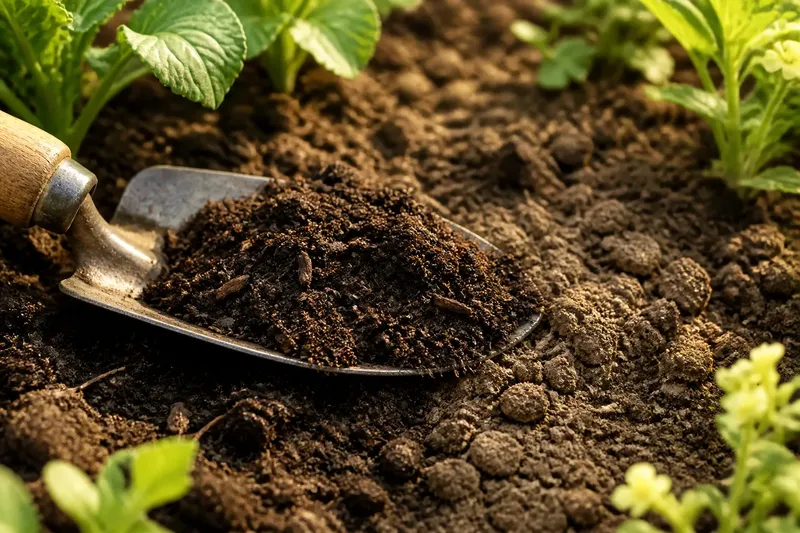
Then look at the soil surface. Make a note of bare patches, leaves gathered against bed edges, and places where rain appears to have washed soil onto a path. A bare patch is an observation, not an automatic order to plant. Some areas are intentionally open, and others may be waiting for a later crop. The useful question is whether the exposure is likely to matter before you next plan to work there.
Stay on paths where the ground is soft. Walking repeatedly through a wet bed can press its surface and make later work less pleasant. If you cannot tell whether a bed is firm enough to enter, leave it alone for now and mark it for another look. Late winter is not improved by proving that mud is, in fact, muddy.
Notice what remains standing
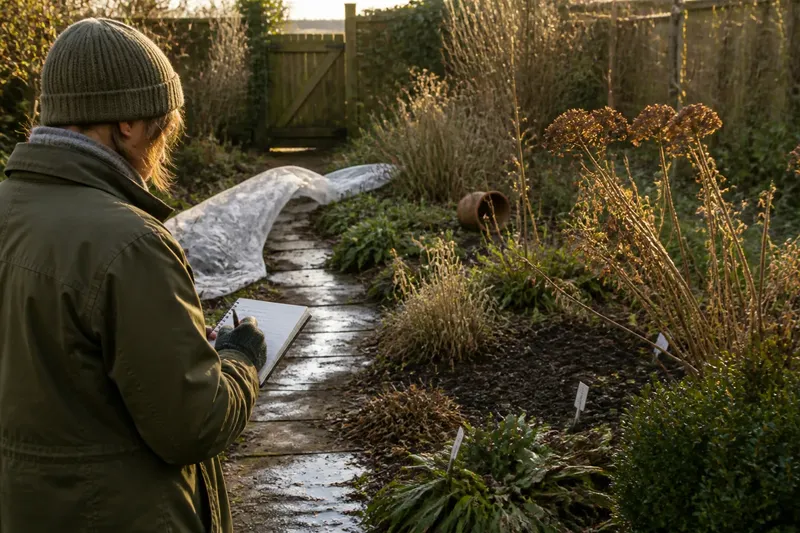
Scan the garden from a few steps back. Seed heads, dry stems, evergreen leaves, and low rosettes can make the beds easier to read than a close inspection alone. Note which plants remain upright, which have fallen across a path, and which are tangled with neighboring growth. A stem leaning into an access route is different from one lying within its own bed.
Standing plant material can also shelter small wildlife and give the plot visible structure while much else is dormant. That does not mean every stem must stay, or that every stem should be cut. Record the location and condition first. If a plant is plainly obstructing movement, you can plan a limited tidy-up; if it is simply dry and unpolished, postponing the decision is reasonable.
Pay attention to labels as well as plants. A marker that has fallen flat may leave you guessing later about what is growing there. Add it to the list of small fixes, but avoid pulling it up just to make the bed look neat. A note in your phone can preserve the location until the ground is suitable for closer work.
Check the edges and the exposed places
At the edges of beds, look for loose mulch, soil displaced onto paths, and places where rain has revealed roots or pushed cover aside. Do not tug at a root or pack wet soil around it simply because it is visible. Note what you saw and return when conditions are clearer. The purpose of the walk is to make a decision, not to improvise a repair with cold hands and questionable footing.
Also notice how wind and rain have changed the garden’s boundaries. A lightweight cover may have shifted; a pot may have tipped; a fallen branch may have landed on a bed. Some situations call for prompt attention because they obstruct access or could cause further damage. Others can wait until you can work without trampling wet ground. Keep the distinction practical and specific.
Imagine a gardener named Lee walking a small backyard after several days of rain. Lee finds a loose cover across a narrow path, a few dry stems leaning within one bed, and a patch of visible soil near a shrub. Lee notes the path obstruction for attention, leaves the stems where they are because they do not block access, and marks the exposed patch for another look once the ground is easier to approach. The observable result is a short, useful work list rather than a damp afternoon spent clearing everything in sight.
Use a short checklist to sort the observations
Write down only items you can point to. For each one, record whether it affects access, exposes soil, or simply looks untidy. That small description makes it easier to choose a response later instead of turning every observation into a job.
- Paths: Is anything blocking the route, or is the surface too slick to use comfortably? Note the location and whether access needs attention soon.
- Bed surfaces: Where is soil visibly exposed, and is the patch intentional or uncertain? Mark it for a later decision rather than covering it without a reason.
- Standing stems: Are they upright, fallen, or crossing a path? Keep the useful structure where it does not obstruct movement.
- Edges and roots: Has rain shifted cover or revealed roots? Record the spot and avoid pressing or digging around it during a wet walk.
- Loose objects: Has a cover, pot, label, or branch moved into a troublesome place? Identify the specific item and whether it affects access or a nearby plant.
- Uncertain plants: Can you identify what is there without disturbing it? If not, note the location and wait for a clearer view rather than guessing.
After the list, mark each item as “soon,” “later,” or “leave.” “Soon” is for a practical obstruction or a change that could become harder to address. “Later” is for a real issue that does not require immediate entry into a wet bed. “Leave” is for a feature that is untidy but harmless, or useful as cover and structure. These are reminders, not a promise to complete a garden makeover before spring.
What should you do when soil is wet?
Can I walk through a wet bed to inspect it?
Use paths where possible and avoid repeated steps across soft soil. If the bed cannot be inspected from its edge, note the area and return when the surface is firmer.
Should I cover every bare patch now?
No. First decide whether the patch is intentional, temporary, or a place that needs attention. A note and a later look are often more useful than adding material simply to remove the sight of bare soil.
Should I cut back dry stems during the walk?
Not just because they look untidy. Check whether a stem blocks access or interferes with nearby growth, then plan only the work that has a clear purpose.
How do I remember what I saw?
Use a short written list and name a recognizable location, such as “behind the bench” or “left edge of the herb bed.” A phone photo can help, but a brief note should explain what decision remains.
Turn the walk into a small plan
Before leaving the garden, review the notes and remove anything that is merely a general impression. “The beds look rough” is not a task; “a loose cover crosses the path beside the shed” tells you what needs attention. If several items depend on the same area becoming drier, group them for a later visit instead of scattering small jobs across the garden.
Keep the next action modest. You might clear a route, secure an object that has shifted, or simply check a marked patch again. For work involving plant care, consult the plant label or the maker’s instructions when they apply, and follow local rules where relevant. If the observation does not point to a clear action, leaving it on the list for another look is a decision in its own right.
A late-winter garden walk checklist works best as a record of conditions, not a demand for instant tidiness. On the next visit, compare what you noted with what has changed: a path may have cleared, a cover may have shifted again, or an exposed patch may no longer need attention. The useful habit is to look carefully before acting, then let the garden keep a few unfinished edges until there is a good reason to touch them.