What Compost Adds to Garden Soil
What compost adds to garden soil is organic matter that can improve structure and support soil life, without replacing the soil already there.
The most common compost mistake is treating it as a substitute for whatever soil is in the bed. What compost adds to garden soil is useful, but it does not erase a dense subsoil, correct every nutrient problem, or turn an unsuitable site into a different one. Used as an amendment, finished compost can contribute organic matter and help soil hold a workable structure; the existing soil still sets the terms.
Compost adds organic matter, not a new soil
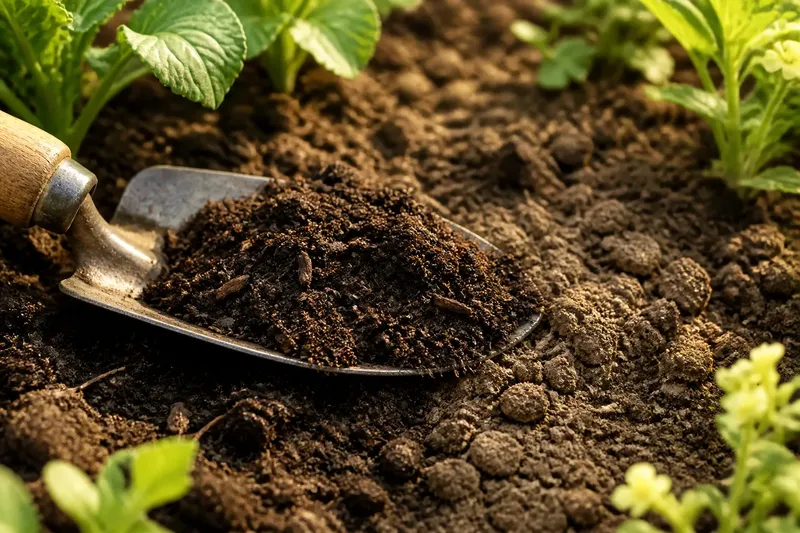
Finished compost is decomposed plant and other organic material that has become relatively stable and earthy. Mixed into or spread over garden soil, it adds organic matter: material that soil organisms can use and that changes how soil aggregates, or clumps of mineral particles and organic matter, hold together.
That change is more important than a dramatic transformation in color. In clay-heavy soil, organic matter can help aggregates remain distinct instead of forming a dense, easily smeared mass. In sandy soil, it can contribute to a more cohesive structure. The improvement is gradual and depends on the soil, the compost, and continued additions of organic material. Compost does not make clay behave exactly like loam, or make sand retain water like clay.
Compost also brings nutrients, but its nutrient content varies with what went into the pile and how it decomposed. It is not a predictable, complete fertilizer for every plant. A gardener who treats a shovelful of compost as a precise nutrient dose is asking a variable material to do the work of a labeled product.
Soil structure shapes what compost can change
Structure describes how soil particles gather into aggregates and the spaces between them. Those spaces matter: roots need room to grow, and water and air move through the soil profile by different routes. Adding organic matter can support aggregation and the activity of soil organisms, which in turn help maintain a crumbly surface layer.
The word “support” matters. Compost is not a universal fix for poor drainage, compacted ground, or a high water table. If a bed stays saturated because water has nowhere to go, adding compost at the surface may improve the top layer without changing the underlying cause. If foot traffic has compressed a path through a bed, adding organic matter alone will not undo the pressure. The amendment can help with soil condition while leaving the site’s deeper constraints in place.
Look at the soil itself before deciding what it needs. A handful that forms a hard ribbon when damp suggests a different texture from one that falls apart readily. A surface that crusts after rain, a bed that remains wet, or soil that drains quickly can each point toward different concerns. These observations are clues, not a full diagnosis; a local extension service or soil laboratory can help when a planting problem persists or nutrient decisions matter.
Finished compost is the useful distinction
Compost intended for a garden bed should be finished rather than actively decomposing. Finished material is generally dark, crumbly, and earthy-smelling, with no obvious heat or strong odor of decay. Some recognizable bits of twig or eggshell can remain; compost is not required to resemble potting mix to be ready.
Fresh or unfinished material can continue breaking down after it is added. That activity can temporarily tie up nutrients near the material, and the contents may be uneven. For routine soil amendment, mature compost is the more predictable choice. If buying it, check the product description and follow the supplier’s directions; labels and local guidance determine any special restrictions.
Quality varies. Compost made from yard trimmings may differ from a blend containing manure or food scraps, and source materials affect both texture and nutrient contribution. Use a reputable municipal program, garden center, or known compost supplier when the source is uncertain. A sour smell, visible contamination, or persistent scraps that look newly dumped are reasons to ask questions rather than spread the material across a bed.
How should compost fit into an existing bed?
Should compost be mixed into the soil?
For a new bed or a bed being refreshed, compost can be incorporated into the upper soil where roots will grow, using a garden fork or hand cultivator without turning the whole profile into a uniform mix. On an established bed, a thin surface application can be left in place for soil organisms and weather to work downward.
Can compost replace topsoil?
No. Compost is an amendment, not a substitute for mineral soil or a complete growing medium for most garden beds. A bed made entirely of compost can settle and behave differently from the soil profile that plants need.
Does compost feed plants directly?
It supplies some nutrients as organic materials break down, but the amount and timing vary. Treat it as a contribution to soil fertility, not as a dependable stand-alone feeding plan for every crop.
How can a gardener tell if the soil needs compost?
Assess the bed’s texture, surface condition, drainage, and planting history rather than relying on color alone. If plants struggle in ways that suggest a nutrient imbalance, a soil test can distinguish that issue from a structure problem.
Apply compost with the soil profile in mind
For established plantings, spread compost over the soil surface while keeping it away from direct contact with stems and trunks. There is no need to bury every particle or dig through a bed full of roots. For a new planting area, blend a modest amendment into the root zone rather than making a separate layer of rich material beneath it; abrupt layers can affect how water moves between materials.
Say you inherit a bed where the surface is crusted after rain, but the soil below is workable and the plants have not shown a clear nutrient problem. You could apply mature compost as a surface dressing, avoid trampling the bed, and observe whether the surface becomes easier to crumble over time. The expected result is a gradual change in the topsoil’s condition, not a sudden cure for every issue in the plot.
Use compost as part of a broader habit of returning organic material to the garden. Mulched leaves, chopped plant residues, and cover crops can also contribute organic matter, though each has its own handling needs. The aim is not to keep adding compost until the bed looks black; excessive additions can create nutrient imbalances or other problems, especially where compost is rich in manure.
Compost works best as an amendment, not a verdict
What compost adds to garden soil is organic matter that can help sustain aggregation, support soil organisms, and contribute nutrients as it decomposes. How much benefit a bed receives depends on its texture, drainage, history, and the character of the compost. The soil already present is not an obstacle to ignore; it is the material compost is meant to improve.
Keep the decision modest and observable: use mature compost, apply it in a way that respects the roots already there, and pay attention to how the soil behaves afterward. When a bed’s main problem lies below the surface or in its nutrient balance, identify that cause before adding more material. Compost is valuable garden infrastructure, but it is not a confession booth for every neglected bed.