Seeds or Young Plants: Choose by Time and Control
Seeds or young plants: compare timing, variety choice, and early care to choose a starting point that fits your growing season and available attention.
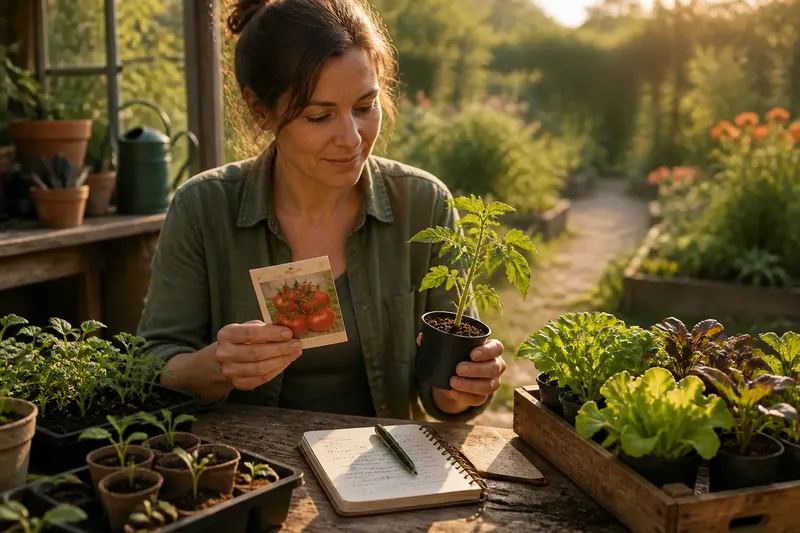
The common mistake with seeds or young plants is choosing by price or habit before checking the calendar. Seeds can cost less per plant, but they need attention before anything reaches the garden; a young plant skips that early stretch while narrowing the varieties available to you. The choice is about timing and control, not a contest with one correct winner.
Start with the date the plant needs to be ready
Work backward from the conditions your crop needs outdoors. A warm-season vegetable such as a tomato or pepper may need a protected start before local nights are mild enough for planting. A cool-season crop such as lettuce may be more comfortable sown directly outdoors when soil and weather suit it. The seed packet and plant label offer useful starting guidance; your local extension service can help interpret it for your area.
Some seeds are commonly started indoors in trays or small pots, while others are sown where they will grow. Direct sowing avoids moving seedlings, but leaves germination and early growth exposed to weather, birds, and shifting soil moisture. Indoor sowing gives you more control over the starting environment, at the cost of space, light, and regular attention.
A young plant buys time only if it is ready for the conditions at hand. A sturdy transplant can be set out when the garden is suitable, but a tender plant still needs gradual adjustment to outdoor sun and wind. Buying early does not make an unsuitable planting date suitable; it gives you a plant to hold and tend while you wait.
Use seeds when variety choice matters
Seed catalogs and packets often offer a broader selection than a nearby garden center. That can matter if you want a particular flavor, color, shape, growth habit, or a variety suited to a short local season. Seeds also make it possible to grow less common plants without waiting for a retailer to stock them.
Read the variety description rather than choosing by a striking name or photograph. Check whether it suits your growing conditions, a container or an open bed, and the harvest or flowering period you have in mind. The label’s terms can distinguish plants that need different care, even when they belong to the same familiar crop.
Seeds are not automatically the better route for unusual varieties. Some plants germinate unevenly, take a long time to reach transplant size, or are awkward to start in a small indoor setup. If a variety is available only as seed, that may be a good reason to try it; allow room for uncertainty rather than counting every seed as a future plant.
Choose young plants when the early stage is the bottleneck
A young plant suits gardeners with limited indoor light, little room for trays, or no appetite for checking small pots through the day. It can also make sense when the planting window is approaching and there is not enough time to raise a seedling from scratch. The purchase shifts the work rather than removing it: the plant still needs sound roots, suitable conditions, and careful establishment outdoors.
Inspect the foliage and stems for healthy growth, and look at the roots if the container allows it. A plant crowded tightly with roots may need more attention after planting than one with a balanced root system. Avoid choosing solely by size; a compact, well-rooted transplant is often easier to handle than a tall, stressed one.
Buying young plants also means accepting the nursery’s selection. Common varieties are often easy to find, but particular cultivars may be unavailable or sold out when you shop. If a specific variety matters, check availability early or order from a seed supplier rather than assuming a later visit will solve the problem.
Match early care to the time you can give it
Seedlings need consistency. Indoor starts require suitable light, moisture that does not leave the mix waterlogged, and enough space as leaves develop. A sunny windowsill may not provide even light through the day, so a grow light can help if seedlings become stretched or lean toward the glass. Trays also need attention when rooms are warm and potting mix dries quickly.
Young plants have their own brief period of extra care. Before planting outdoors, tender transplants generally need a gradual introduction to sun, wind, and cooler air. After planting, watch them while their roots adjust. A nursery plant is not maintenance-free; it simply arrives past the fragile germination stage.
Say you have a bright spare shelf, a packet of a favorite tomato, and the patience to check trays regularly, but your planting date is still some time away. Starting seed indoors gives you access to that variety and lets you manage its early growth. If the shelf is already full and the outdoor season is close, a sturdy tomato transplant may be more workable, provided you can acclimate it and care for it after planting.
Treat direct sowing as a separate option
The choice is not limited to starting seeds indoors or buying transplants. Many crops can be sown directly in their final growing place, avoiding both the nursery purchase and the transplant stage. Root crops such as carrots are commonly grown this way because moving young roots can disturb their development. Beans and many leafy greens are also familiar candidates, depending on the variety and local conditions.
Direct sowing is a poor shortcut if the soil is too cold, dry, compacted, or likely to wash out the seed. Follow the packet’s directions for sowing depth and spacing, then keep the area appropriately moist as seedlings emerge. Thin crowded seedlings when needed; leaving every sprout in place can produce competition rather than a larger harvest.
For a mixed garden, it is reasonable to use all three approaches. Start a favored variety from seed, buy a few plants to fill a gap, and sow easy crops directly. That spreads the early work across different dates and lets each plant begin in the way that suits it.
Questions that help settle the choice?
Are seeds cheaper than young plants?
Seeds can be less expensive per potential plant, especially when a packet contains more than you need for one season. The comparison changes if you need lights, trays, potting mix, or replacements after poor germination; use what you already own and consider how many plants you actually want.
Can I save leftover seeds for another season?
Some seeds remain usable after storage, but longevity varies by plant and by how they have been kept. Follow the supplier’s storage guidance, keep packets dry and cool, and treat older seed as less predictable rather than planning around every seed sprouting.
Should I buy the biggest transplant available?
Not necessarily. A very large plant can be stressed, root-bound, or difficult to establish, while a compact plant with healthy foliage and balanced roots may settle in more readily. Choose one that appears vigorous and suited to the conditions you can provide.
Can I move a seedling outdoors as soon as it has leaves?
Leaves alone do not mean a seedling is ready for outdoor conditions. Consider its development, the crop’s needs, and local weather, then acclimate tender starts gradually before planting. Follow the seed supplier’s or plant label’s guidance, and check local advice where conditions are unusual.
Decide by the work you want to own
Choose seeds when access to varieties, control over the starting stage, or the pleasure of raising a plant from its beginning justifies the extra attention. Choose a young plant when time, indoor space, or dependable early care is the limiting factor. Direct sow when the crop and conditions make that the simplest route.
For seeds or young plants, the useful question is not which option is superior in general, but which fits the crop’s timing and the care you can provide. Check the packet or label, count backward from a suitable planting window, and leave some room for weather to disagree. That allowance is often more useful than a perfectly full tray of seedlings arriving at the wrong moment.