The Watering Habit That Keeps the Hose Busy
Check soil moisture near plant roots before watering, so you can skip needless hose time and give each plant water when its root zone needs it.
The most common watering mistake is treating the calendar as evidence: Monday means water, so out comes the hose. That routine can leave roots dry beneath a damp surface, or keep already moist soil wetter than the plant needs. A quick root-zone check is more useful than a dependable appointment with the hose.
Plants use water at different rates. Soil texture, recent rain, a container’s size, wind, and the plant’s stage of growth all affect how quickly moisture disappears. Choose among three approaches: check the soil by hand, use a moisture meter, or let a flexible schedule remind you to inspect.
Checking soil by hand suits a small, accessible garden
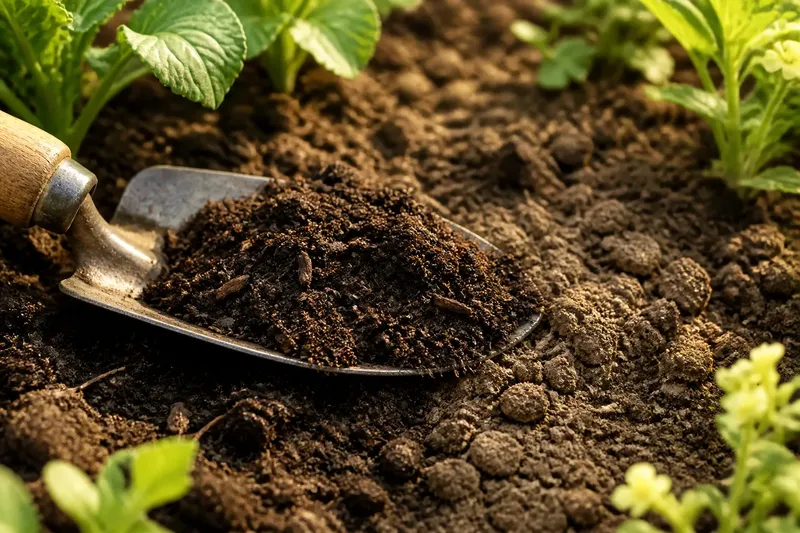
For a few beds or containers, your finger is often the simplest tool. Check near the plant, not right beside the stem, and reach below the dry surface layer. In a garden bed, a narrow trowel can expose soil around the active root zone without turning the whole bed. In a pot, check through a drainage hole or press a finger into the mix from above.
Feel the soil rather than judging it by color alone. Cool, slightly moist soil may not need water yet; soil that feels dry through the depth you checked is a stronger reason to water. Clay can feel sticky when wet, while sandy soil may feel loose even when it holds some moisture. Learn how your own soil feels in damp and dry conditions.
This method suits gardeners who can reach their plants and want a direct answer without buying equipment. It is less convenient for dense plantings, large beds, or soil that is difficult to probe. Use a trowel at a few representative spots rather than assuming the surface tells the whole story.
A moisture meter helps where touch is unreliable
A basic soil moisture meter can help with deep containers, crowded pots, or beds where a finger cannot reach the root zone. Insert the probe near the plant and read it according to the device’s instructions. A meter gives a repeatable point of comparison, but it cannot decide for you whether a particular plant should be watered.
Probe placement matters. Testing beside a pot’s edge may give a different reading from testing nearer the roots, and one spot cannot represent every part of a wide bed. Check more than one location when soil seems uneven. Clean and store the probe as its maker directs; forcing it into hard ground can damage the tool.
This option suits gardeners who prefer a consistent reading or have pots with deep root zones. It is less useful if a reading becomes an automatic command. Pair it with what you know about the plant and soil, and consult the device instructions or plant-care label when those guide the decision.
A flexible schedule can prompt a useful check
A schedule can help, provided it prompts an inspection rather than ordering a watering. You might check containers every few days during a warm spell, then water only those whose root-zone soil is dry. After rain, check before adding more. A shower may wet foliage and the surface without soaking the soil where roots are working.
This approach suits a gardener managing many plants who might otherwise forget to look. A paper garden journal or phone calendar can prompt the inspection. The reminder stops being useful when it becomes an unexamined rule: conditions change, and a fixed day cannot know whether a pot dried quickly or a bed stayed moist.
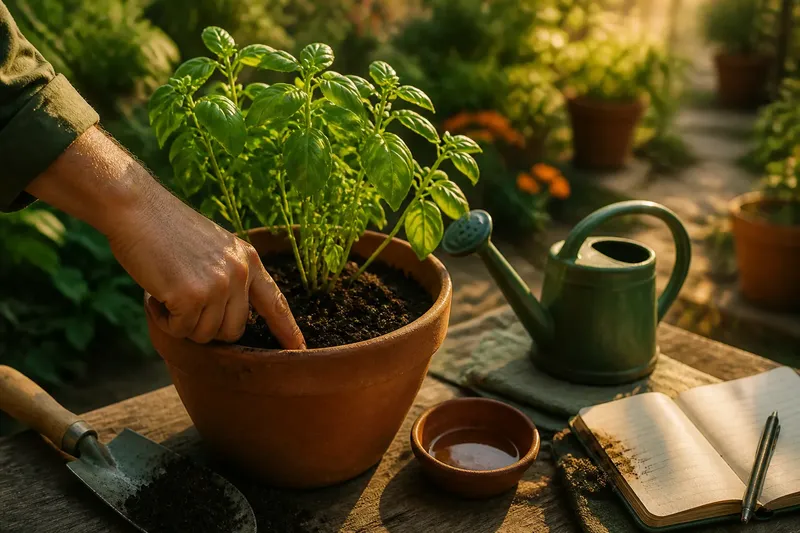
Say you keep a basil plant in a terracotta pot on a breezy patio. On a scheduled watering day, the surface looks pale, but a finger check finds cool, moist mix below it. You postpone watering and check again later; when the deeper mix feels dry, you water the soil and let excess drain. The observable result is a decision based on the root zone, not the surface or the calendar.
How should you choose and use a soil moisture check?
How deep should I check the soil?
Check below the surface, where the plant’s roots take up water, rather than relying on the top layer. The useful depth varies with the plant, container, and soil, so use a finger or narrow trowel to inspect soil without disturbing roots.
Should I water if the surface looks dry?
Not necessarily. A dry surface can cover moist soil below, especially in a pot or after a brief shower. Check deeper before deciding; if the root zone is also dry, watering is more likely to help.
Is a moisture meter better than a finger check?
Neither is universally better. A finger check is quick and free for accessible soil, while a meter can help with deep or crowded containers. Use either to inspect moisture, not as a substitute for understanding the plant and its growing conditions.
When should I water after rain?
Check the soil rather than assuming rain reached the roots. If the root zone remains moist, wait; if it is dry, water as needed. Rainfall, shelter, and soil texture make conditions vary across a garden.
Choose the check you will actually use
For a small garden, start with a finger or trowel check. Add a moisture meter if deep pots or crowded planting make that awkward, and use calendar reminders only to prompt inspection. The useful habit is not a strict interval; it is a repeatable pause to ask whether soil near the roots needs water.
When you make that pause routine, the hose can stay put on days when the soil is already moist. When watering is needed, direct water toward the soil around the roots rather than sprinkling leaves and paths. That keeps the decision tied to what the plant can use, not to a familiar day on the calendar.